

Blue Light Blocking Glasses are a Scam If (!) you buy the wrong glasses! The problem is most people do not get the glasses that work. They get some cheap pair off Amazon.
Have you ever had someone send you a link to a documentary before?
What if that documentary was about you?
And you had no idea it existed!
At some point last year, someone published a documentary on youtube called Blue Light Blocking Glasses are a Scam - then they changed the title, probably because they called out Dr Andrew Huberman in the video and he probably has his lawyers speak with whomever put this out.
The YouTube "documentary" featured Dr Andrew Huberman, Ben Greenfield, and me.
The film showed my TEDx talk from 2017 (BEFORE I ever started a blue light blocking company - remember, we started this company in 2025, but in the YouTube video, they claimed that when I gave the TEDx talk, I owned a blue light blocking company. I did not. I actually changed my life by wearing blue light blocking glasses and was asked to give a TEDx talk about my experience).
Anyway, a study I quoted in my TEDx talk was highlighted in the YouTube documentary showing a section of the study stating the opposite of what I remarked in the presentation. But if you actually look at the next paragraph in the study, the one right under where they highlighted, it supports what I said in the presentation.
In addition, the "documentary" left out ALL the science about melatonin, melanopsin receptors, and light. Which is odd for a video claiming to talk about the science of blue light. There was also no mention of the Rensselaer Polytechnic Institute (RPI) - university published studies on blue light blocking glasses and melatonin.
Still, I’m here to tell you….
Blue Light Blocking Glasses are a Scam
IF you buy the wrong glasses!
The problem is most people do not get a legitimate pair of blue light blocking glasses that work.
They get some cheap pair off Amazon.
Or they get their prescription glasses made with “blue-tec” coating from their eye doctor.
Often these cheap pairs and prescription coatings come with lenses that are mostly clear.
I know, people want to look “normal” and have clear lenses. Yellow or orange lenses look different. I get it.
The problem is that “normal” people aren’t sleeping well. They have brain fog. They aren’t repairing at night like they should. They lack energy in the early afternoon.
Eye doctors know better, but they refuse to do better.
Clear coatings definitely reflect “some” blue light, but not nearly enough to be effective. Not nearly enough to protect your eyes or your sleep.
Here is me testing a pair of “blue light blocking” glasses from amazon. I loosely call these blue light blocking glasses because they don’t really block much blue light.
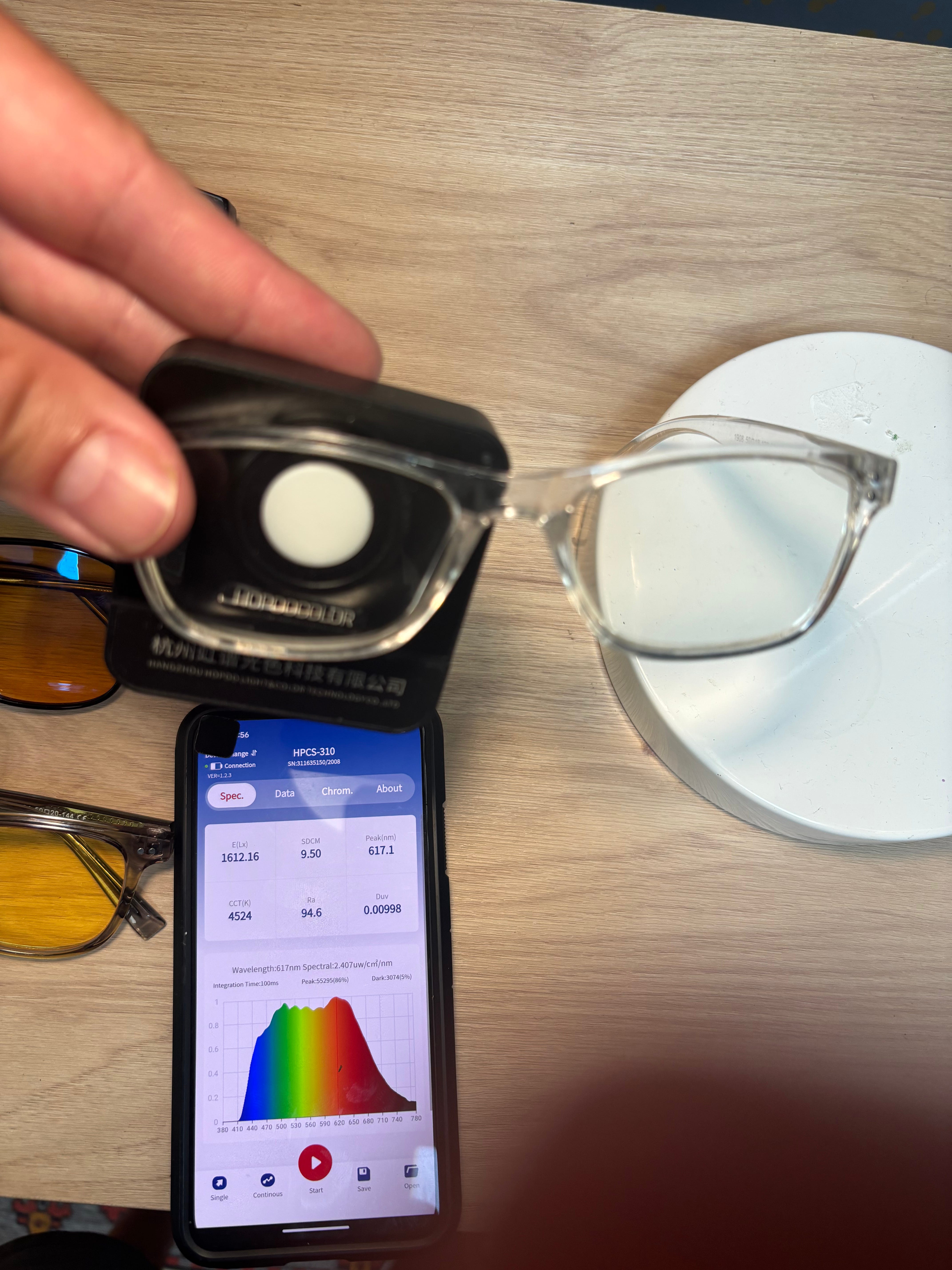
Now, what you see above is a spectrometer reading. It reads the visible wavelengths of light. When I place the glasses over the spectrometer, the lenses are supposed to block blue light.
Testing of Various Blue Light Blocking Glasses
I grabbed a variety of our own DREAMWALKERZ blue light blocking glasses, along with a pair of “clear” “blue light blocking” glasses from Amazon and a pair of Red lens competitor glasses that I own.
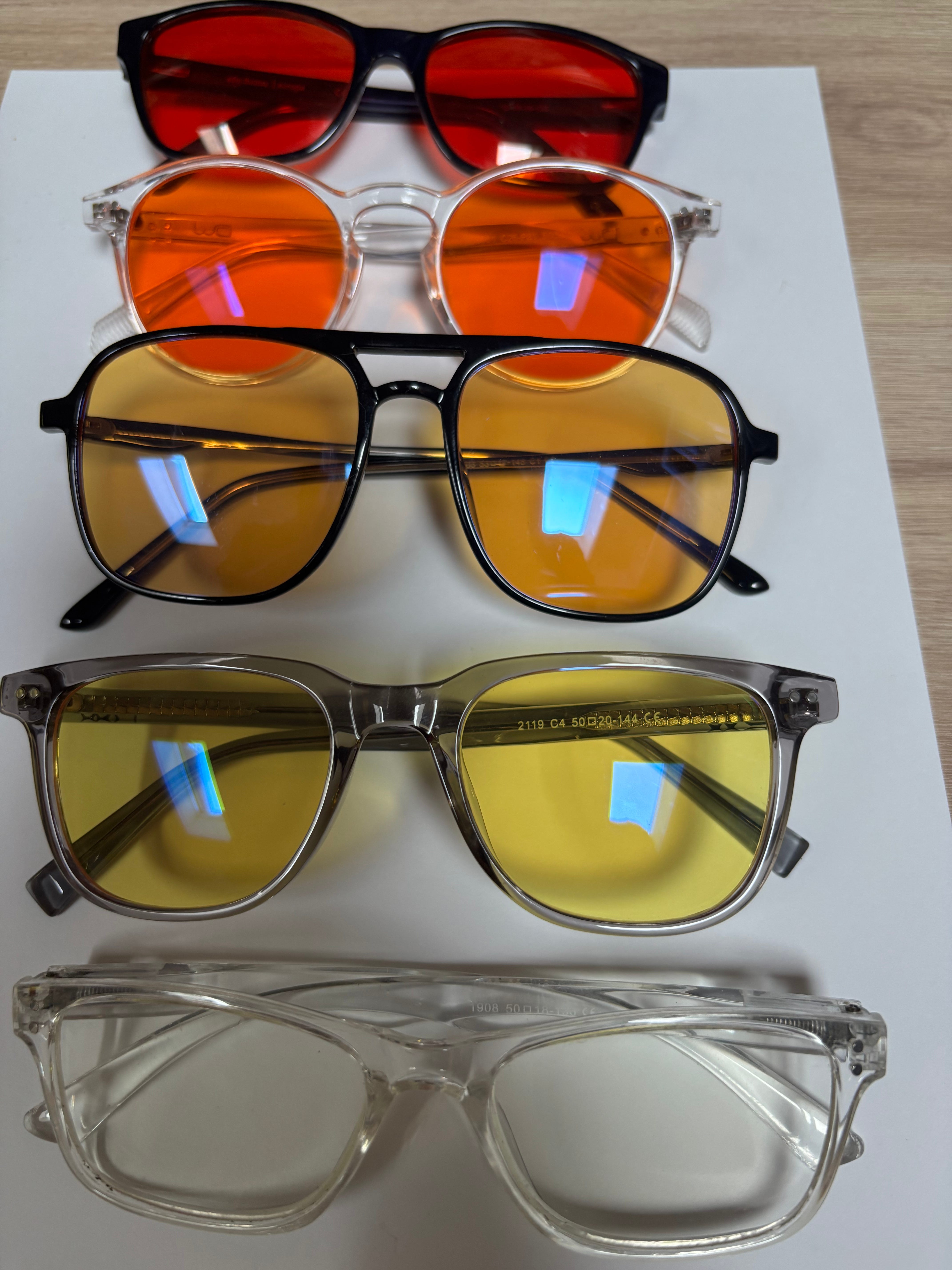
Testing Clear Blue light Blocking Lenses
I first took a reading of the ambient light. I intentionally grabbed a light that would produce a nice amount of blue light to really show how much is blocked by each type of lens.
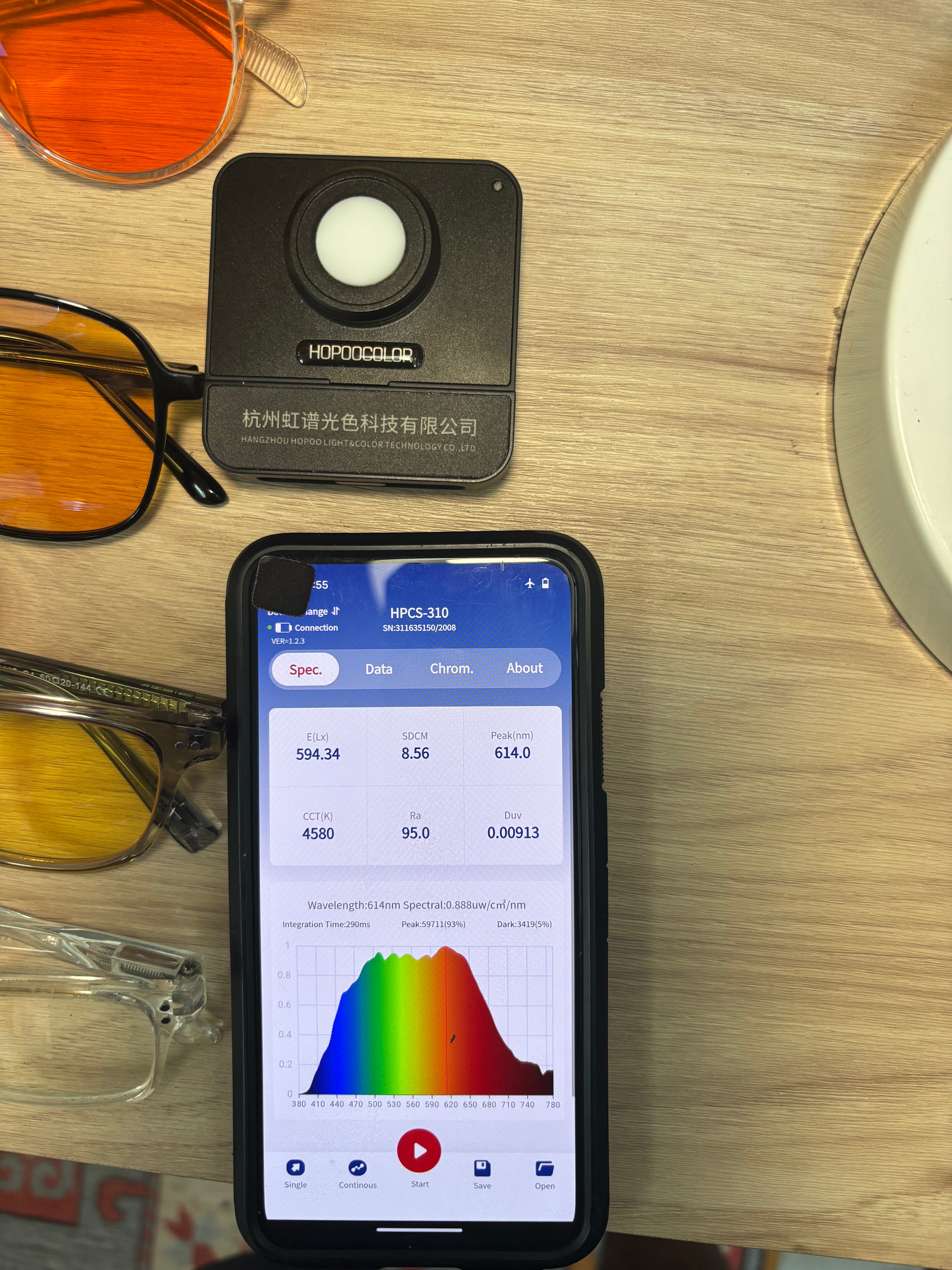
Here is a side-by-side of the clear lenses filtering light vs the control (no lenses in front of the testing spectrometer and the light source.

Notice there is still a TON of blue light coming through. This will be more obvious as you view the spectrum from testing the additional lenses below.
These clear lens blue light blocking glasses are what most people wear as blue light blocking glasses, and then wonder why they aren’t effective at helping them sleep. It’s why many sensational videos out there call blue light blocking glasses a scam.
Here’s a few studies showing that blocking blue light is effective.
Blue light suppresses Melatonin
A Researcher Tries Blue Light Blocking Glasses
Here’s the science on how blue light affects the brain and why wearing a pair of blue light blocking glasses that stops blue light from hitting the melanopsin receptors would be effective:
There are three types of blue light blocking glasses in the world that work
-
Daytime computer glasses with YELLOW or AMBER coated lenses.
- Blocks about 30-70% of blue light from screens
-
Protects eyes from free radical damage from the “Blue Light Hazard” due to high intensity blue light. Indoor lighting and screens are made without the red and infrared light (like you would get from the sun) that helps mitigate the damage of blue light.
-
Slightly distort screen color due to the tint of the glasses
-
Are not appropriate for graphic designers when doing detailed color work
-
Are not appropriate for wearing AT NIGHT! After dark, these glasses do not block enough blue light to truly support melatonin production and improve sleep and repair. However, they can be used fro driving at night to block those harsh LED headlights.
Here is the Spectrometer reading for Yellow and Amber Daytime Computer lenses showing the amount of blue light the block:
Yellow Dreamwalkerz Crystal Collection MySapphire Daytime Computer Glasses

Compare the above lenses and their ability to block blue light to the clear lenses. there is a huge difference in the amount of blue light that is blocked with the right lenses.
Below are our Amber lens Dreamwalkerz Solstice Society Aviators Daytime Computer Glasses

In the above test, you see a reduction in blue and even green light with the amber lenses.
2. Orange lens blue light blocking glasses that block nearly all blue light.
Next, we test the MySapphire Nightime Sleep Blue Light Blocking Glasses with orange lenses

Above you see that all the blue light disappears, most of the green light and even some yellow light. These lenses do a great job of blocking the biologically active wavelengths of light that impact our melatonin and sleep.
3. Finally, red lens blue light blocking glasses.
These red lens glasses are very effective at blocking blue and green light. However, in our opinion, most people stop wearing these type of blue light blocking glasses because they are so hard to see out of. The amount of light blocked is so high that it is hard to function at night. You cannot drive with these, and even getting around the house can be challenging because they let through such a low amount of light. If you are sitting in bed reading, these would be fine, but most people are uncomfortable with the amount of light they block and we find the orange lens glasses to be a perfect fit for blocking the right amount of light and being able to see comfortably at night.

As you see in the photo above, the red lenses really block a ton of light. All the blue, all the green and a large amount of yellow light are completely blocked.
Here's the video showing the testing:
The takeaway is simple: blue light blocking glasses aren’t a scam
— but many products sold as “blue light blockers” are.
Clear, lightly coated lenses and bargain pairs from big marketplaces often let enough blue light through to make no meaningful difference for melatonin production, sleep quality, or daytime recovery.
The science on melanopsin receptors, melatonin suppression, and multiple university studies shows that filtering biologically active wavelengths works — but only when the lenses are designed to block the right wavelengths at the right intensity.
When choosing glasses, pick the tool that matches the job: yellow/amber lenses for daytime screen work, orange lenses for evening and pre-bedtime use.
Don’t be fooled by marketing or convenience — test or verify the blocking performance (spectrometer readings are ideal) and prioritize lenses that demonstrably reduce blue light at night.
Done right, the right pair can restore sleep, reduce brain fog, and improve daytime energy; done wrong, they’re just expensive fashion accessories.